




Are Silicone Air Fryer Liners Safe? Pros, Cons & Safety Guide (2026)
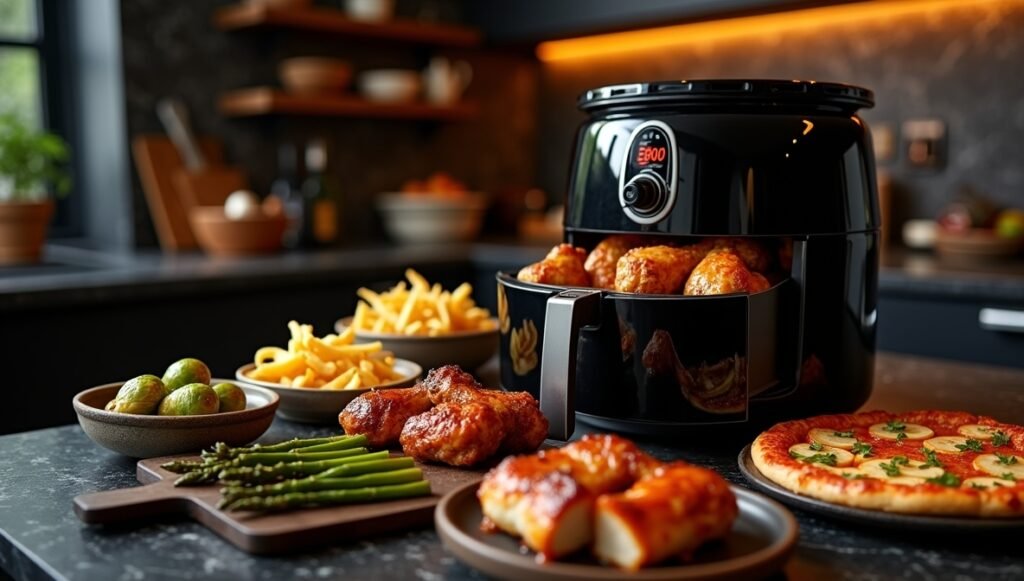
Air fryers have completely changed modern cooking by making it faster and healthier to prepare everyday meals. From crispy fries to roasted vegetables and juicy chicken, they deliver great results with very little oil.
But one common problem remains — cleanup. Grease, crumbs, and sticky sauces often get baked onto the basket, making washing a hassle after every use. That’s why many people now use silicone air fryer liners as a convenient solution.
These heat-resistant inserts help keep your air fryer clean while reducing scrubbing time. But the big question is still important: are silicone air fryer liners safe to use at high temperatures?
If you’re just getting started, check out our guide on the best air fryer for beginners to choose the right model
Check out top-rated silicone air fryer liners on Amazon for different sizes and designs.
Table of Contents
Are Silicone Air Fryer Liners Safe? (Quick Answer)
Silicone air fryer liners are safe when made from food-grade, BPA-free silicone. They can withstand high temperatures up to 450°F (230°C) without releasing harmful chemicals. However, proper sizing, placement, and airflow are essential for safe and effective use.
What Are Silicone Air Fryer Liners?
Silicone air fryer liners are flexible, heat-resistant inserts that fit inside your air fryer basket. They act as a protective layer between your food and the metal surface, helping catch crumbs, grease, and sticky sauces before they burn onto the basket.
Made from food-grade silicone, these liners can handle high cooking temperatures without melting or breaking. They are durable, reusable, and easy to remove after cooking — making cleanup quick and simple.
You’ll find them in different shapes and sizes to match various air fryer models, including round, square, and dual-basket designs. Choosing the right fit is important to ensure proper airflow and even cooking.
Compared to disposable parchment paper, silicone liners are a more cost-effective and eco-friendly option, which is why they are becoming one of the most popular air fryer accessories today.
Are Silicone Air Fryer Liners Safe?
Material Safety
Let’s keep it simple. Most premium liners are made from BPA-free, food-grade silicone, meaning they do not contain harmful chemicals like BPA, lead, or phthalates. This makes them a safer option compared to many low-quality plastics.
Food-grade silicone is widely used in kitchenware and is considered safe by global food safety standards when properly manufactured.
So yes — high-quality silicone air fryer liners are safe for everyday cooking when used correctly.
Heat Resistance
Silicone is highly heat-resistant and can easily handle typical air fryer temperatures (around 400°F to 450°F / 200°C to 230°C). It won’t melt, warp, or release harmful fumes during cooking.
This makes silicone one of the most reliable heat-resistant silicone cooking accessories for modern kitchens.
Proper Usage & Safety Tips
Safety depends not just on material, but also on correct use:
- Always ensure the liner fits your basket properly
- Do not let it touch the heating element
- Avoid oversized liners that block airflow
- Keep enough space for hot air circulation
Correct usage ensures both safety and even cooking results
Benefits of Using Silicone Air Fryer Liners
Easy Cleanup
They catch grease and food residue, so you don’t need heavy scrubbing after cooking.
Basket Protection
They protect the non-stick coating and help extend the life of your air fryer.
Eco-Friendly & Cost-Saving
Reusable liners reduce waste and save money compared to disposable parchment paper.
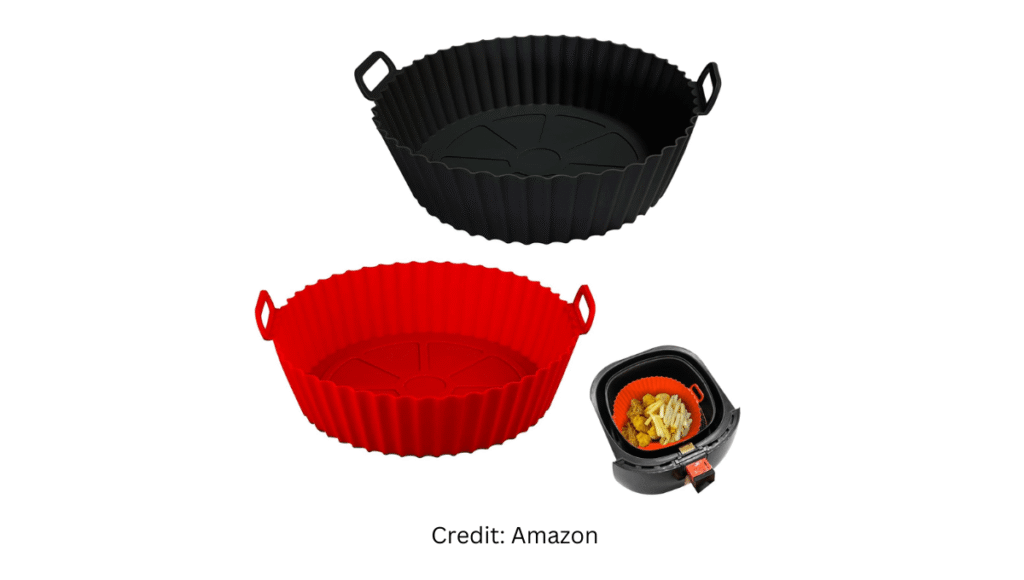
You can explore some of the most popular and highly-rated options available on Amazon.
Great for Messy Foods
Perfect for sticky or saucy dishes like wings, ribs, and marinated meats.
Even Cooking Support
Raised ridges help airflow, improving cooking consistency while draining excess oil.
Drawbacks (Keep It Real)
Silicone liners are helpful, but not perfect:
- May slightly reduce crispiness in fries or breaded foods
- Oversized liners can block airflow and affect cooking
- Poor fit can lead to uneven results
Choosing a well-designed liner with proper airflow can solve most of these issues — check trusted options on Amazon.
When NOT to Use Silicone Air Fryer Liners
While silicone air fryer liners are incredibly useful, there are certain situations where it’s better to skip them for optimal cooking results and safety.
1. Avoid for Crispy Foods
If you’re cooking foods that rely on maximum airflow for crispiness—like fries, nuggets, or breaded chicken—it’s best not to use a liner.
Silicone liners can slightly block airflow, which may result in less crispy textures, especially on the bottom.
Best tip: Cook directly in the basket for extra crunch.
2. Don’t Use Oversized or Poor-Fit Liners
Using a liner that doesn’t properly fit your air fryer basket can cause serious issues:
- Blocks air circulation
- Leads to uneven cooking
- May fold or touch heating elements
3. Never Preheat with an Empty Liner
Placing a silicone liner inside the air fryer during preheating without food on top can be risky.
- The lightweight liner may shift due to strong air circulation
- It could move upward and touch the heating element
- This may cause damage or safety hazards
Always put food on the liner before turning on the air fryer.
4. Avoid for Light or Loose Foods Alone
Very light foods (like spinach or herbs) may fly around due to air circulation if not weighed down properly.
Use a liner only when food has enough weight to stay in place.
Pro Tip
Use silicone liners strategically, not for every recipe.
They’re perfect for messy, saucy dishes—but skip them when airflow and crispiness matter most.
Silicone Liners vs. Parchment Paper vs. Cooking Without a Liner
To help you decide the best method for your cooking style, we have broken down the main options in a simple comparison table.
| Feature | Silicone Liners | Parchment Paper | No Liner (Bare Basket) |
| Cleanup ease | Very easy | Easy | Harder |
| Airflow | Moderate | Better | Excellent |
| Crispiness | Good | Good | Best |
| Reusability | High | Single-use | N/A |
| Eco-friendliness | Yes | Limited | Yes |
Still exploring your options? Check out our guide on the best air fryer under $100 for budget-friendly picks that deliver great performance.
Guide to Choosing the Best Silicone Air Fryer Liner
Not all silicone air fryer liners are created equal. Choosing the right one ensures better cooking performance, safety, and long-term durability. Here are the key factors to consider before buying:
1. Choose the Right Size
Size is the key factor to consider when choosing a liner.A poor fit can block airflow and affect cooking results.
- Measure your air fryer basket (diameter or length/width)
- Pick a liner that’s slightly smaller than the basket.
- Avoid liners that touch the sides or heating element
Tip: Always check compatibility with your specific air fryer model.
2. Check Thickness & Durability
Silicone liners come in different thickness levels.
- Thicker liners: More durable, long-lasting, and resistant to warping
- Thin liners: More flexible but may wear out faster
Go for a medium-to-thick liner for the best balance between flexibility and durability.
3. Look for Proper Airflow Design
Airflow is crucial in air frying. The wrong design can lead to soggy food.
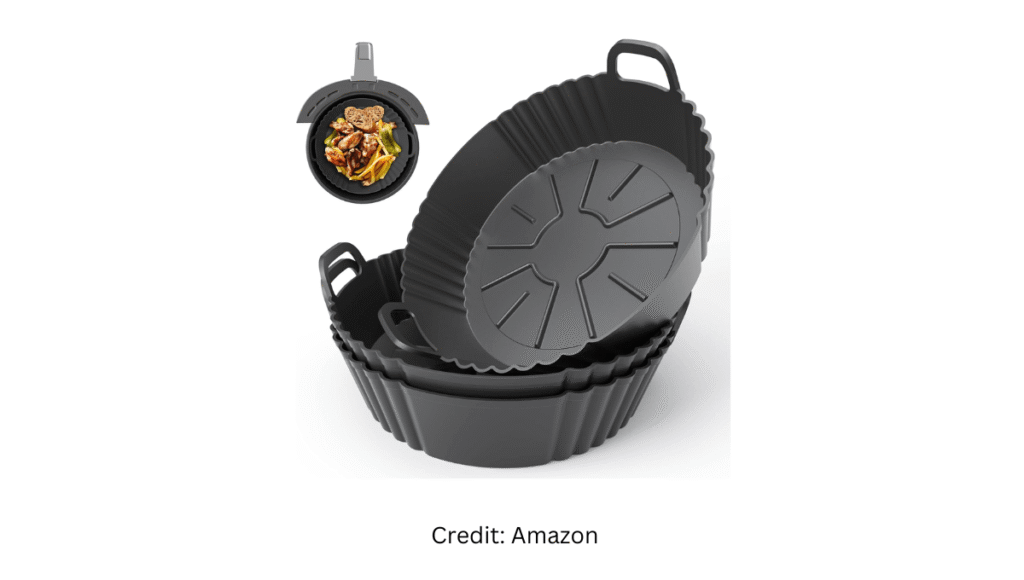
- Grooved or ridged base: Helps circulate hot air under food
- Perforated (holes) design: Improves crispiness
- Solid base: Better for messy or saucy foods
Best choice: A liner with raised ridges or airflow channels for even cooking.
4. Ensure Food-Grade Certification
Safety should always come first when cooking.
- Look for food-grade silicone
- Ensure it is BPA-free
- Check for certifications like FDA-approved or LFGB standard
Avoid cheap, low-quality liners that may contain fillers or harmful chemicals.
Quick Buying Checklist
Before purchasing, make sure your liner is:
- The correct size for your air fryer
- Made from thick, durable silicone
- Designed for proper airflow
- Certified food-grade and BPA-free
Make sure your liner matches your appliance by following our detailed Air Fryer Size Guide before buying.
How to Use Silicone Air Fryer Liners
Placement Tips
Proper placement is the key to maintaining great airflow. Ensure the liner sits completely flat on the bottom of the basket. Do not let the edges ride up the sides or fold over your food. If your liner comes with raised ridges, place your food directly on top of those ridges in a single layer to promote even heat distribution.
Cooking Tips
Knowing when to use your liner is a great way to maximize your cooking results. Use them for messy, saucy foods, baked goods, or anything prone to dripping grease. Skip the liner when you want maximum crunch on your french fries, crispy chickpeas, or lightly breaded items that need unrestricted air circulation.
Cleaning & Maintenance
Are silicone air fryer liners dishwashers safe? Yes, the vast majority of them are completely dishwasher safe. You can toss them onto the top rack of your dishwasher for a completely hands-off cleanup. You can also wash them by hand in the sink using warm, soapy water and a soft sponge.
For best results, always wash your liner after every use to prevent residual odors. Silicone can sometimes hold onto strong food smells if left unwashed, so a quick scrub with dish soap and warm water immediately after cooking is highly recommended.
Frequently Asked Questions (FAQs)
Are silicone liners worth it?
Yes, especially for messy cooks. If you frequently make saucy wings, marinated meats, or cheesy dishes, the time you save on cleanup makes a reusable liner highly worthwhile.
Can they reduce cooking crispiness?
Slightly. Because they restrict the bottom airflow, foods might not get as crispy on the underside. Flipping your food halfway through the cooking cycle usually solves this problem.
Can silicone air fryer liners be used safely on a daily basis?
Absolutely, if they are food-grade. High-quality, BPA-free silicone air fryer liners are non-toxic and built for daily high-heat exposure.
Can you cut them to size?
This is not recommended. Cutting the silicone compromises its structural integrity and can leave jagged edges that might warp or degrade faster under high heat.
Which foods work best with liners?
Marinated meats, baked goods, sticky wings, roasted vegetables, and any dish covered in thick sauces or glazes perform brilliantly in these liners.
Final Verdict: Are Silicone Air Fryer Liners Safe to Use?
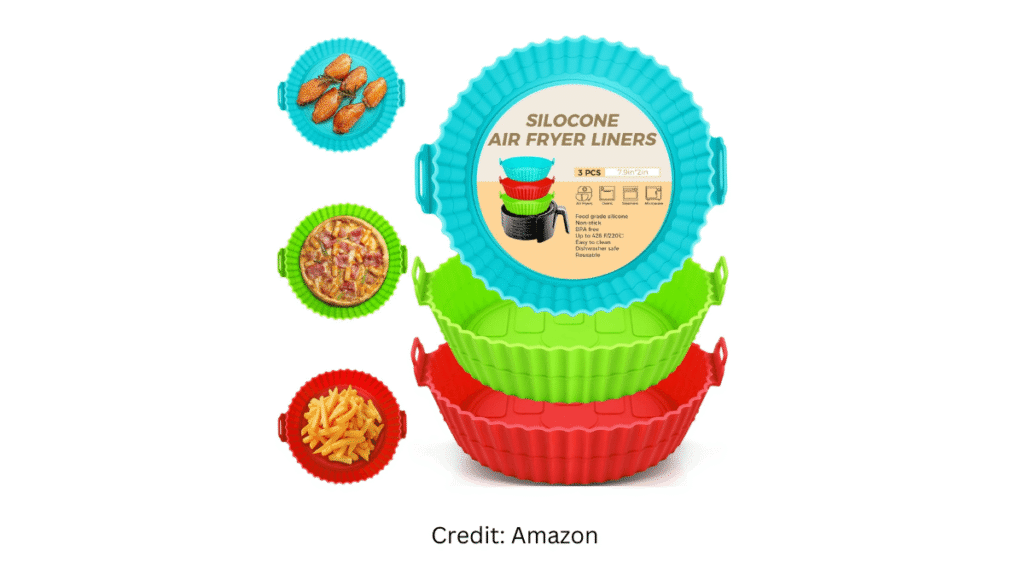
So, are silicone air fryer liners safe to use in everyday cooking? Yes—when you choose high-quality, food-grade, BPA-free silicone, they are completely safe, heat-resistant, and reliable for regular use.
They are ideal for messy, saucy meals and make cleanup effortless. However, for maximum crispiness, cooking directly in the basket is still the better option.
Overall, silicone air fryer liners are safe, convenient, and a smart upgrade for modern kitchens—when used correctly.
When used properly, they are among the most safe air fryer accessories available for modern kitchens.
Ready to upgrade your cooking? Check the best silicone air fryer liners available on Amazon.
To get the most out of your appliance, explore our complete collection of best air fryer recipes, accessories, and cooking guides.